
One of Marks’s early supporters was none other than Warren Buffett. The CEO of Berkshire Hathaway first met Marks and his long-time partner Bruce Karsh when they both held debt in the same distressed company. Buffett provided them with his proxy during the restructuring, leading to a successful outcome and a lasting friendship. After Marks referenced Buffett in one of his memos, he sent him a copy, to which Buffett responded with a note offering to endorse Marks’s future book.
“He said, ‘If you ever write a book, I’ll give you a blurb for the jacket,'” Marks recalled. This encouragement became the impetus for Marks’s first book, “The Most Important Thing.” Buffett honored his promise, stating, “When I see memos from Howard Marks in my mail, they’re the first thing I open and read. I always learn something.”
Marks’s investment philosophy emphasizes understanding market psychology over mere forecasting. This approach enabled him to identify the dot-com bubble, caution against excessive risk-taking in 2007, and pinpoint a market bottom during the 2008 financial crisis. Today, he observes parallels in the current market landscape but refrains from labeling the AI-driven market as a bubble.
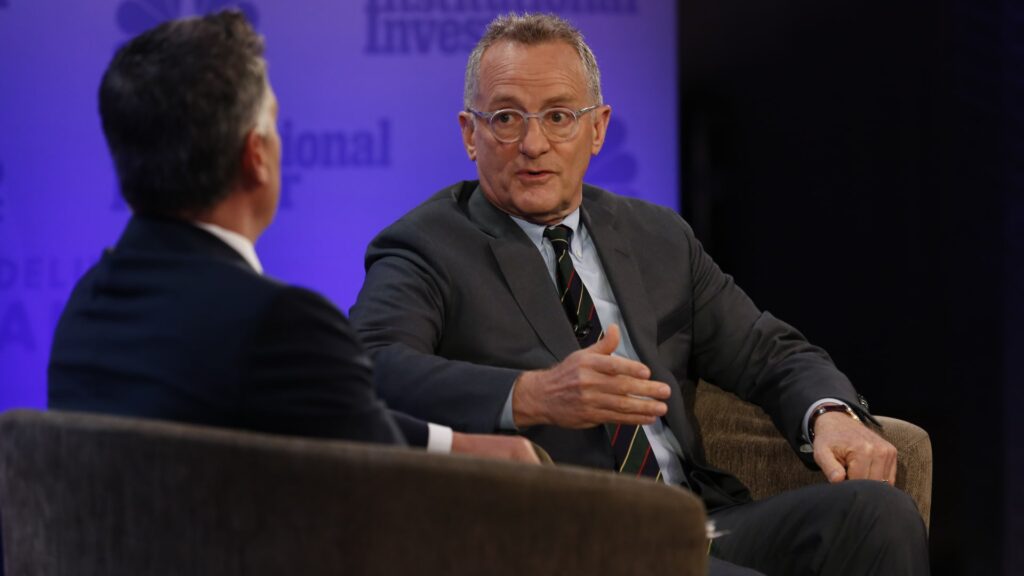
“Valuations are high but not crazy,” Marks noted in an interview with CNBC’s Sarah Eisen. “Expensive and going down tomorrow are not synonymous.” At 79, Marks continues to be active and engaged. He views his memos as a means to remind both himself and his readers that markets are influenced as much by human behavior as they are by numerical data.
“Writing the memos is an absolute joy for me,” he stated. “They serve as the vehicle through which I share my thinking with the investment community, allow me to connect with Oaktree’s clients and employees, and serve as my creative outlet. I plan to keep at it.”