

The declining dollar is increasingly making a compelling case for investing in international equities. However, before investors commit to this asset class, it’s crucial to evaluate the available options—specifically, the choice between passive and active fund strategies.
The allure of international equities has grown stronger following the first rate cut of 2025. Market expectations suggest that the Federal Reserve will continue on a path of easing, which is likely to bolster the local currencies of various countries. Since a nation’s market performance often correlates with the strength of its currency against the U.S. dollar, the Fed’s easing measures could pave the way for significant upside in international equities.
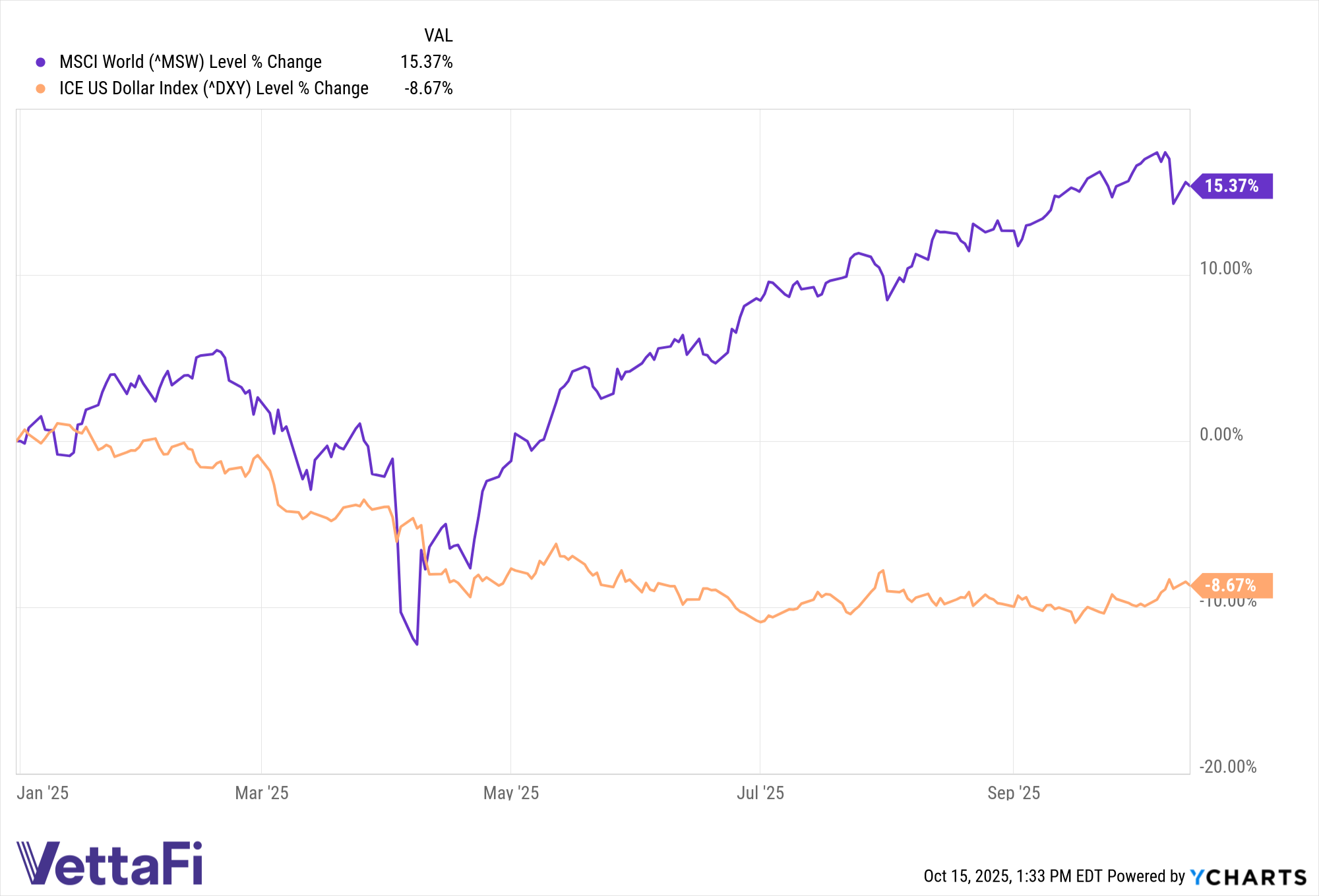
This strength is evident when comparing the performance of the MSCI World Ex USA index with the ICE US Dollar Index. A year-to-date analysis reveals a stark contrast in performance between these two indices, highlighting the robustness of the MSCI index. Future interest rate cuts could further widen this performance gap, reflecting a broader trend of de-dollarization as more countries seek alternatives to the dollar as the world’s reserve currency.
While the macroeconomic factors surrounding the dollar are significant, international equities come with their own set of nuanced risks that investors must consider. These include political and economic risks specific to individual countries. Additionally, tariffs in the current market landscape complicate the dynamics of international stocks. Passive funds, which typically track an index, lack the flexibility to adjust holdings during periods of volatility. This is where actively managed funds can excel, particularly in an international market characterized by various systematic and idiosyncratic risks.
Active Flexibility
For those seeking exposure to international equities, opting for an active fund rather than an index-linked option is advisable. Given the complexities of international markets, active management allows portfolio managers to tailor holdings to address the unique challenges and opportunities that arise in different countries.
One fund worth considering is the Thornburg International Equity ETF (TXUE). This fund leverages the expertise of Thornburg’s investment management team, who are well-equipped to navigate the complexities of international markets.
For more news, information, and strategy, visit the Portfolio Strategies Content Hub.