
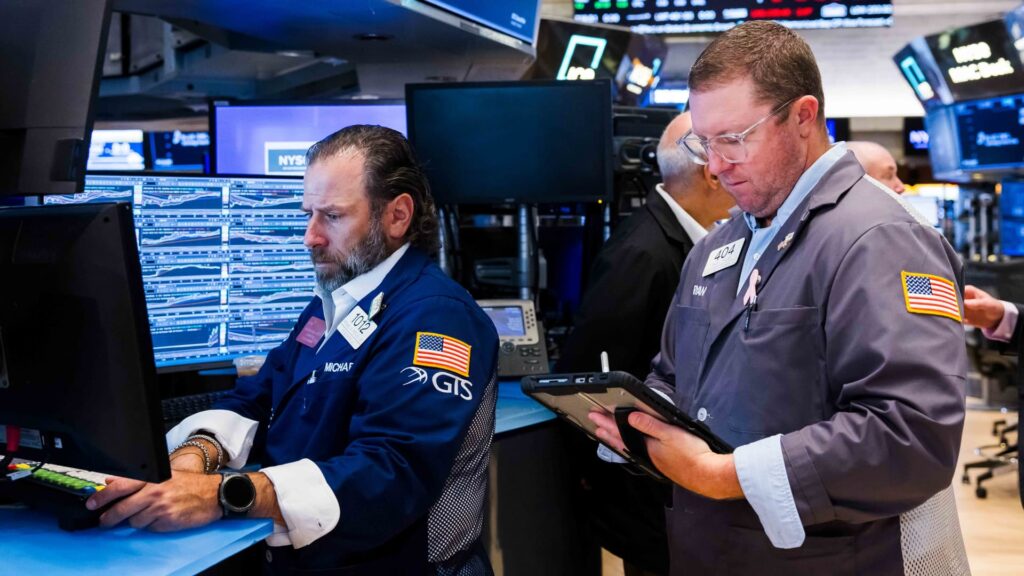
Jay Woods, chief market strategist at Freedom Capital Markets, remarked, “This market hasn’t pulled back over 3% since April, and now we have a reason to pause. But that’s all this should be—a mere pause in a rally, giving dip buyers an opportunity to be active again.”
Here’s a summary of insights from major banks regarding the situation:
Raymond James: The anticipated shutdown, coupled with a memo from the Director of the Office of Management and Budget (OMB), Russ Vought, calling for large-scale reductions in force (RIF) targeting discretionary program employees, marks a significant shift from traditional shutdowns. Historically, these furloughs have been temporary, with workers recalled once funding resumes. This change could lead to increased market volatility, as the usual playbook for government shutdowns—brief duration, political fallout for the initiating party, and eventual compromise—may no longer hold. They do not expect this to significantly impact Federal Reserve monetary policy; in fact, weaker data could intensify pressure for accelerated rate cuts, especially if furloughs adversely affect employment and consumer data.
Evercore ISI: They believe that a shutdown lasting less than a few weeks will not have major macroeconomic implications. The Congressional Budget Office (CBO) confirmed that most lost economic activity from the 2018-19 shutdown was recovered once the government reopened, and they expect a similar outcome this time, likely within the quarter as the shutdown occurs early in Q4.
Canaccord Genuity: The lengthy 35-day shutdown in 2018 under the first Trump administration contributed to a 0.4% reduction in annualized GDP growth in Q1 of 2019, according to CBO estimates. This potential hindrance to growth adds another layer of uncertainty to an already volatile policy outlook. While predicting the shutdown’s length is challenging due to increasing polarization, they note that shutdowns have averaged around eight days. They do not foresee a significant economic impact unless the shutdown extends over a longer period.
Historical patterns indicate that shutdowns tend to be “buy the news” events, particularly for small-cap stocks. The S&P 500 typically experiences a slight decline of about -0.3% in the week leading up to a shutdown, with an average return of -0.1% during the shutdown itself. However, stocks generally perform well once the shutdown ends, with the S&P 500 averaging returns of 3.3% over three months, 7.8% over six months, and 11.5% over 12 months. Small-cap stocks, represented by the Russell 2000, often see even greater returns.
Deutsche Bank: They note no signs of an imminent compromise between the White House and Democrats, with Republican Senate leadership indicating that further votes may not occur until after the Yom Kippur holiday on Thursday.
Citi Research: They suggest that equity markets may be anticipating a shorter shutdown based on current price actions. Should the impasse continue, they predict some short-lived turbulence, typically followed by a sharp recovery. They emphasize that strong optimism around AI, combined with a more accommodating rate backdrop, suggests a shutdown is unlikely to reverse current bullish momentum.
UBS Wealth: They advise investors to look beyond shutdown fears and focus on other market drivers, such as ongoing Fed rate cuts, strong corporate earnings, and robust AI capital expenditures. They recommend quality fixed income, particularly medium-term maturities, for a compelling combination of income and resilience amid slower growth.
Bank of America: They maintain that the shutdown will likely be relatively short. While the current situation appears to lack a clear path to reopening the government, history shows that shutdowns tend to be brief, with only the partial 2019 shutdown lasting more than a month.
Height Securities: They estimate a greater than 50% probability that the shutdown will extend into next week, given the significant gap between the parties’ positions. They highlight early signs of cracks in Democratic unity, which could hint at a potential exit strategy. Depending on how the current shutdown concludes, it may set the stage for another prolonged shutdown when the proposed stopgap bill expires in November.