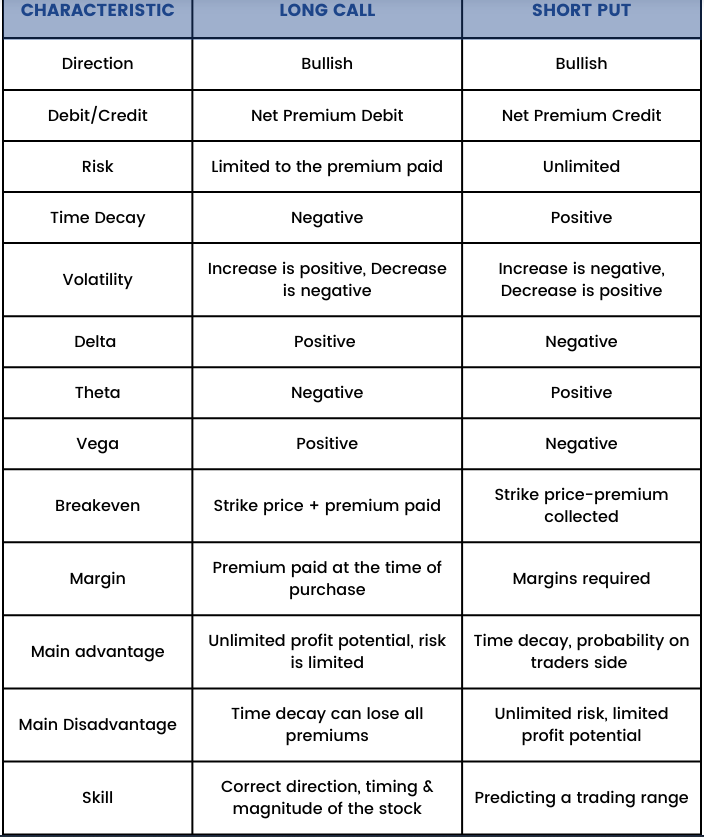

One of the most effective ways to illustrate the differences between trading strategies is through a payoff profile, which shows the potential profit and loss (P&L) for a trade at various underlying prices.
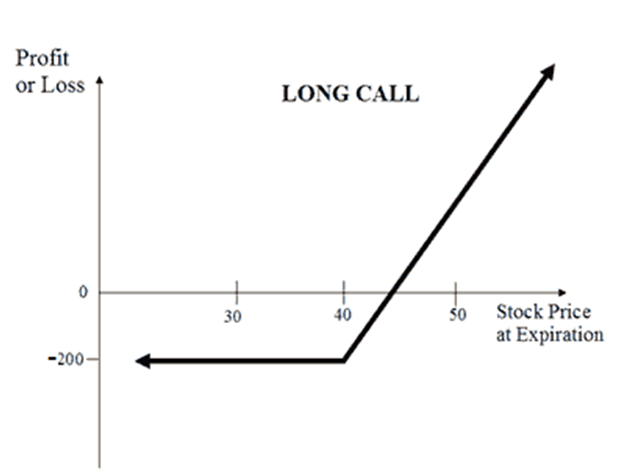
Long Call:
Short Put:
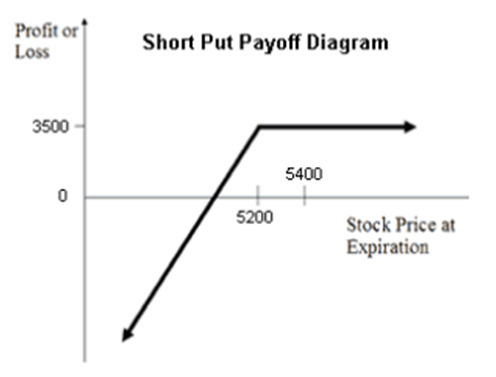
The differences between these two strategies are immediately apparent.
You buy a long call when you anticipate a significant upward movement in the market. This reflects an optimistic outlook, where you are willing to risk some capital in hopes of achieving substantial returns.
Conversely, you sell a put when you believe the market will not decline significantly. In this scenario, you act almost like a bookie, collecting a fee from another trader who is making a larger bet. If the trader’s prediction is incorrect, you keep the premium. For them to profit, the market must move enough to offset the value of their bet.
Reason #1: You Have Reason to Believe the Market Will Go Up. A Lot.
If you’re bullish on a stock, there are several strategies to express that sentiment:
● You can buy the stock outright.
● You can purchase call options on the stock.
● You can buy the stock and sell covered calls against it.
● You can invest in a sector ETF or a basket of related stocks.
● You can sell puts against the stock.
● You can engage in various bullish options spreads.
While all these strategies are bullish, they present very different P&L paths.
Among these, buying a long call is often the most straightforward approach.
Reason #2: Other Traders Disagree With You (Low Volatility)
Professional options traders often emphasize that trading options inherently involves a bet on volatility, whether you intend to or not.
This is because option prices are closely linked to the expected future price movements of the underlying asset. For instance, options on a volatile stock like Tesla are generally more expensive than those on a stable stock like Johnson & Johnson. This is due to the frequent price fluctuations associated with Tesla.
In the options market, the term “volatility” refers to traders’ expectations regarding future price fluctuations. When traders label a stock as “high volatility,” they mean that significant price changes are anticipated, leading to higher option prices.
For example, if Tesla is set to announce earnings, the potential for drastic price changes makes options expensive. Traders know that if the results are poor, the stock could plummet, while positive results could lead to a surge. This expectation drives up option prices.
However, volatility is relative. You should compare a stock’s current volatility to its historical volatility. This can be assessed using measures like implied volatility rank (IV Rank), which indicates how expensive a stock’s options are compared to the past year.
Reason #1: To Capitalize on Expensive Option Prices
As previously mentioned, every option trade involves an implicit bet on volatility. Buying an option suggests that you believe volatility is underpriced, while selling indicates the opposite.
Successful option traders often sell volatility rather than buy it, capitalizing on the “volatility risk premium.” Research shows that selling volatility when it is high can yield excess returns.
High volatility typically signals market stress. When investors feel anxious, they rush to buy protective options, driving up their prices temporarily until the market stabilizes.
When a stock experiences a rapid decline, the demand for puts increases, making them expensive and creating opportunities to sell overpriced options. However, selling puts is a bullish strategy, requiring a solid reason to be optimistic about the underlying stock.
Reason #2: You’re Moderately Bullish on a Stock
There are instances when you may feel more confident that a stock will not decline than that it will rise significantly.
Such situations can arise in various contexts:
For example, a stock trading within a long-term range without clear catalysts for movement.
Or consider a stable stock like Apple (AAPL) during a bull market; while it may not be the most volatile, its shares rarely plummet in a strong market.
Some traders even sell puts on potential takeover targets, believing that the stock price has a “floor” due to acquisition interest.
In such cases, buying calls for a big payoff may not be the best strategy. Instead, selling puts can generate income as long as the stock remains stable, which is particularly beneficial in a steady bull market.