

In this article, we’ll discuss the differences between American and European options and how they can impact your trading strategy. Understanding these distinctions can help you avoid potentially costly mistakes.
American vs. European Options: Differences
There are four key differences between American-style and European-style options:
- Underlying
All optionable stocks and exchange traded funds (ETFs) feature American-style options. Among broad-based indices, only limited indices like the S&P 100 have American-style options. Major indices such as the S&P 500 predominantly offer European-style options. Examples of European-style options include the S&P 500 Index (SPX), the Russell 2000 Index (RUT), and the Nasdaq (NDX), which are the three most liquid European-style options traded at NavigationTrading.
- The Right to Exercise
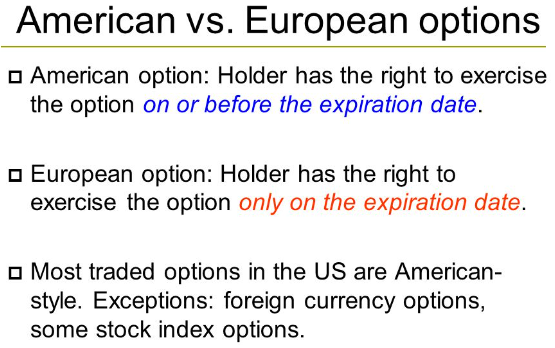
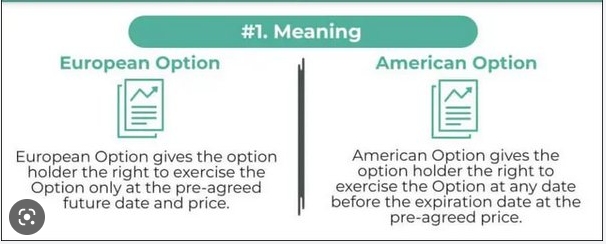
Owners of American-style options can exercise their options at any time before expiration. In contrast, European-style options can only be exercised at expiration.
- Trading of Index Options
- American index options cease trading at the close of business on the third Friday of the expiration month. Some options, known as “quarterlies,” trade until the last trading day of the calendar quarter, while “weeklies” stop trading on the specified Friday.
- European index options stop trading one day earlier, at the close of business on the Thursday preceding the third Friday.
Settlement Price
The settlement price is the official closing price for the expiration period, determining which options are in-the-money and subject to auto-exercise. Any option in-the-money by 1 cent or more on expiration is automatically exercised unless the owner instructs their broker otherwise.
- American index options cease trading at the close of business on the third Friday of the expiration month. Some options are “quarterlies,” trading until the last trading day of the calendar quarter, or “weeklies,” ceasing trading on the specified Friday.
- European index options stop trading one day earlier, at the close of business on the Thursday preceding the third Friday.
Here’s how it works:
- On the third Friday of the month, the opening price for each stock in the index is determined. Since individual stocks open at different times, some opening prices are set at 9:30 AM (EST) while others may take longer.
- The underlying index price is calculated as if all stocks were trading at their respective opening prices simultaneously. This is not a real-world price, so you cannot assume the published index price reflects the settlement price.
Exercise Rights
Owning an option gives you the right to exercise it. Occasionally, exercising an option before expiration may be beneficial, such as to collect a dividend, but this is rare.
If you are short an American-style option and receive an exercise notice before expiration, you become short the underlying stock. This is typically manageable unless your account cannot support a short stock position. If that’s the case, you should reconsider trading options.
The Easiest Way to Avoid Early Exercise Risk
The primary risk of early assignment occurs with American-style, cash-settled index options. To mitigate this risk, consider avoiding American options altogether. If you receive an assignment notice in the morning, you must repurchase that option at the previous night’s intrinsic value, which can expose you to significant risk if the market moves unexpectedly.
Cash Settlement
Cash settlement benefits all parties involved:
- American: The settlement price for American-style options is the regular closing price or the last trade before the market closes on the third Friday. After-hours trades do not count.
- European: The settlement price for European-style options is not published until hours after the market opens, making it less straightforward.
Since these cash-settled options are typically European-style, assignment only occurs at expiration, and the cash value is determined by the settlement price.
Settlement
With American-style options, there are rarely surprises. If a stock is trading at $40.12 shortly before the closing bell on expiration Friday, you can expect the 40 puts to expire worthless and the 40 calls to be in-the-money. If you hold a short position in the 40 call and wish to avoid assignment, you can repurchase those calls. While the settlement price may fluctuate, significant changes in the last few minutes are unlikely.
Conversely, European-style options often yield unexpected settlement prices, which can be beneficial for some but disastrous for others. On the morning of the third Friday, significant price changes from the previous night’s close can occur, turning a seemingly low-risk overnight position into a gamble.
When holding a European option, consider the following on Thursday afternoon, the day before expiration:
- No shares exchange hands.
- You don’t need to worry about rebuilding a complex stock portfolio, as you won’t lose your stocks if assigned an exercise notice on calls you wrote.
- The option owner receives the cash value, equal to the option’s intrinsic value. If the option is out of the money, it expires worthless.
If you are short the option, you face a different challenge:
- If the option is nearly worthless, holding onto it may be wise, as low-priced options can sometimes yield unexpected rewards.
- If you own an option with significant value, you must decide whether to risk the potential for the settlement price to make it worthless or double its value.
Taxes
The tax treatment for European-style options is generally more favorable, as they qualify for IRS Section 1256 tax treatment. This means that 60% of the gains are considered long-term capital gains, taxed at a lower rate, while 40% is taxed as ordinary income.
In contrast, American-style options are taxed as 100% short-term capital gains, which are added to your ordinary income based on your overall tax bracket.
Summary
If you decide to trade index options, it’s crucial to understand the differences between American and European options. More importantly, grasping how the settlement price of European options is determined can help you manage your positions effectively, especially when short options are involved. To mitigate settlement risk, consider exiting positions that have little more to gain by Thursday, the last trading day for those options.
Mark Wolfinger has been in the options business since 1977, when he began his career as a floor trader at the Chicago Board Options Exchange (CBOE). Since leaving the Exchange, Mark has been giving trading seminars as well as providing individual mentoring via telephone, email, and his premium Options For Rookies blog. Mark has published four books about options. His Options For Rookies book is a classic primer and a must-read for every options trader. Mark holds a BS from Brooklyn College and a PhD in chemistry from Northwestern University.
Related articles