
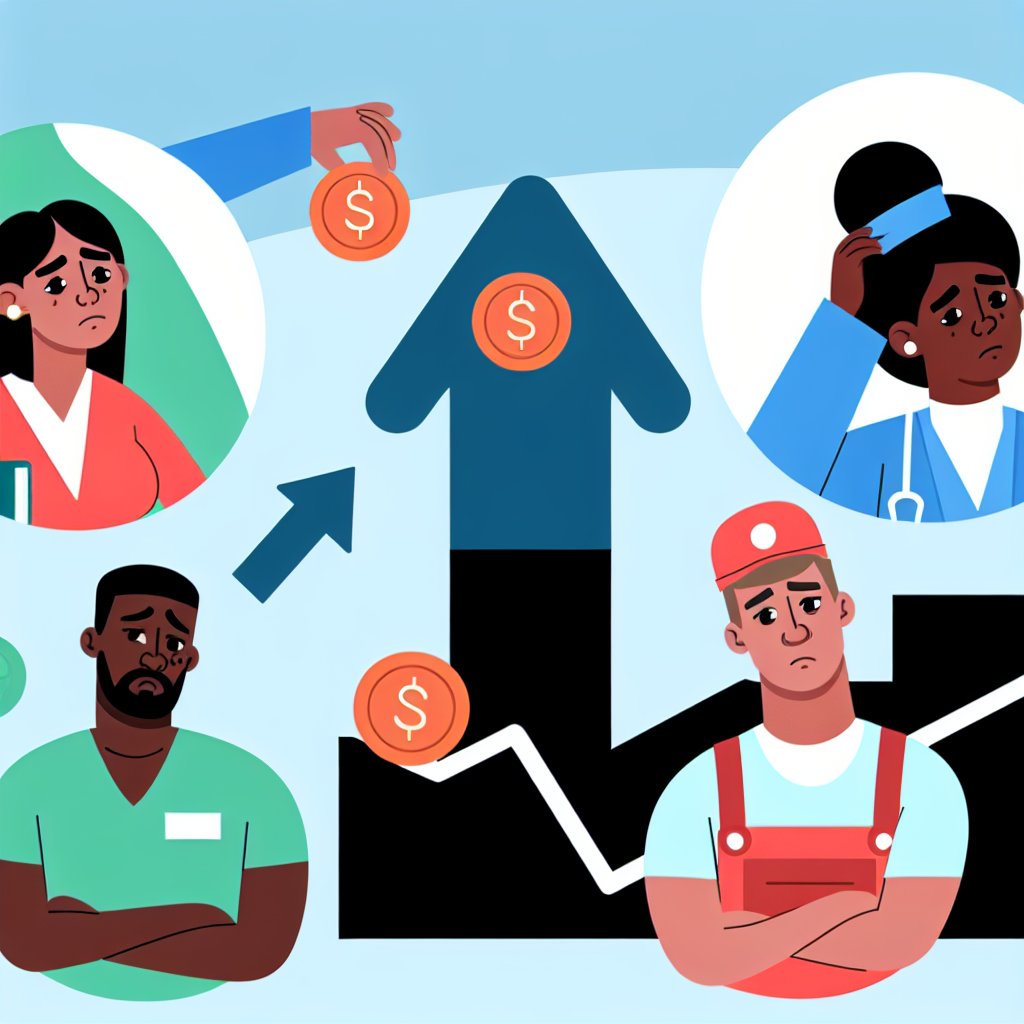
As the economy gradually recovers, many middle-income families find themselves grappling with stagnant wages that hinder their financial stability. Despite improvements in overall economic indicators, the lack of wage growth remains a pressing issue. This article delves into the factors contributing to stagnant wages and their implications for middle-income households.
Understanding Wage Stagnation
Wage stagnation refers to the period during which the nominal value of wages remains unchanged or grows at a slower rate than inflation. For many middle-income earners, this has become a persistent reality. According to the Economic Policy Institute, wages for many workers have barely kept pace with inflation over the past few decades, leading to diminished purchasing power.
The Impact of Inflation
Inflation plays a critical role in the financial plight of middle-income families. When prices for goods and services rise, families need to stretch their budgets even further. A report from the Bureau of Labor Statistics reveals that inflation rates have surged in recent years, exacerbating the stress on household finances. For families already coping with stagnant wages, rising costs threaten their ability to afford basic necessities like food, housing, and healthcare.
Demographic Variances in Wage Growth
It’s crucial to understand that wage stagnation affects different demographics in varying ways. Studies indicate that individuals with lower educational attainment or those employed in certain industries, such as manufacturing and retail, have experienced significant wage stagnation. Conversely, those in the tech and healthcare sectors often see more substantial wage increases. This discrepancy highlights the importance of education and skill set in today’s job market.
Geographic Disparities
Geographically, wage stagnation also varies. Cities with a high cost of living often see wages that don’t match the financial demands placed on families. A report from the Pew Research Center illustrates how metropolitan areas like San Francisco and New York struggle with affordability, despite occasional higher salaries. Middle-income families in these regions often face the dual challenge of high living costs and stagnant wages, which can lead to financial distress.
The Long-term Implications of Stagnant Wages
The ramifications of stagnant wages extend into the future, affecting not just the present but generations to come. When families struggle to make ends meet, it impacts their ability to save for emergencies, invest in education, or prepare for retirement. The Federal Reserve’s data indicates that wealth inequality is exacerbated by wage stagnation, as families with lower earnings report higher financial instability.
The Role of Policy in Wage Growth
Addressing the issue of stagnant wages may require systemic changes in policy. Advocates suggest comprehensive reforms, such as raising the minimum wage, enhancing labor rights, and investing in education to ensure that workers can adapt to changing market demands. Organizations like the National Employment Law Project advocate for policies that promote fair wages and better working conditions, which can foster economic stability for middle-income families.
Finding Ways to Cope
While the challenges posed by stagnant wages are daunting, some families are finding ways to cope. Budgeting effectively, seeking additional income sources, and prioritizing education and upskilling can empower families to navigate financial difficulties. Various community resources, including financial education programs and job training initiatives, can also aid in mitigating the effects of wage stagnation.
In summary, while the economy shows signs of recovery, stagnant wages remain a significant hurdle for middle-income families. The combination of inflation, demographic factors, and geographic disparities paints a complex picture, requiring both individual and systemic responses. Understanding these dynamics is essential for recognizing the broader implications of wage stagnation on our economy and society. For further insights into economic trends, you may explore resources from the Economic Policy Institute and the Federal Reserve.