
Months have passed since our return from Hawaii, and surprisingly, my fear of missing out (FOMO) regarding the AI tech boom has diminished. While I still lack a high-paying job amidst the soaring AI capital expenditures, I’ve invested enough in AI to feel secure without needing to chase opportunities within the industry.
My true concern isn’t about missing the next AI unicorn; it’s about raising children in an increasingly harsh world. A world where, due to their identities, they might face rejection from every top-50 university they apply to. By the time they graduate from a mediocre university, many entry-level jobs may have been automated away by AI.
This isn’t a distant dystopia. CEOs of major companies are actively exploring and adopting AI, leading to hiring freezes and mass layoffs. For instance, Accenture has cut 11,000 jobs, and Lufthansa has let go of 4,000 employees due to AI advancements. These aren’t isolated incidents; they signal a troubling trend. Anyone paying attention can foresee the challenges my children may face when they enter the workforce in 15 to 18 years.
As an investor, forecasting the future is crucial. As a parent, it’s essential to anticipate potential hardships for your children. If you can predict even somewhat accurately, you’ll likely find yourself wealthier, calmer, and better prepared.

Jobs Are Certainly Going Away Due To AI
Examining the recent performance of the S&P 500 alongside total job openings reveals a concerning inflection point. Investor optimism is high as AI promises increased productivity, yet job openings continue to plummet.
As an investor, I hope the S&P 500 keeps climbing—history suggests it will over time. However, as a parent, I fear that job openings may collapse to levels reminiscent of the 2009 financial crisis. I vividly remember that period, which motivated me to launch Financial Samurai after enduring multiple layoffs at Credit Suisse.
By 2032, we could see a scenario where the S&P 500 is at an all-time high, yet job openings mirror the lows of the last crisis.
After consulting with numerous readers this year, it seems many Americans remain unaware of the impending changes. While I may sound pessimistic, much of my wealth has stemmed from recognizing and investing in long-term trends. The AI bulldozer is indeed real.

Find Your Minimum AI Investment Comfort Point
Just as there’s a “Minimum Investment Threshold” where work becomes optional, there’s also a “Minimum AI Investment Threshold” that can alleviate concerns about AI jeopardizing your career or your children’s futures.
This threshold is conceptually similar to your Coast FIRE number. However, unlike Coast FIRE, which can be risky for many, the Minimum AI Investment Threshold serves as an active hedge against potential job losses.
Here’s how to calculate yours:
Plug into an AI tool. Use a compound interest calculator or your favorite AI LLM to crunch the numbers.
Forecast the timeline. Estimate when your job may be at risk due to AI or when your children will enter the job market.
Estimate future living expenses. Project today’s basic living expenses forward using a reasonable inflation rate (2%–4%).
Choose your cushion. Decide how many years of basic living expenses you want saved in AI investments—anywhere from 1 to 10 years.
Discount to today’s dollars. Use a discount rate of 2%–8% (lower if conservative) to determine how much you’d need to invest now.
Example Using Our 8-Year-Old Son
Let’s consider my 8-year-old son. By 2040, he’ll be 23 and a college graduate. An income of $40,000 today would equate to approximately $62,319 in 2040, assuming a 3% annual inflation rate.
It may take him 2–4 years of job searching to realize that his aspirations of working in big tech may be out of reach. At that point, he might need to pursue a trades job to make ends meet.
To provide him with a cushion, I need to set aside about $125,000–$250,000 by 2040. Here’s how much I’d need to invest today to reach that goal:
| Discount Rate | Needed for $125,000 | Needed for $250,000 |
|---|---|---|
| 2% | $92,877 | $185,754 |
| 3% | $80,233 | $160,465 |
| 4% | $69,408 | $138,816 |
| 5% | $60,127 | $120,254 |
| 6% | $52,158 | $104,316 |
| 7% | $45,306 | $90,612 |
| 8% | $39,405 | $78,810 |
In a realistic worst-case scenario—if he takes 4 years to find a job—I’d need about $185,754 invested today to ensure he has a financial cushion.
It’s crucial for parents to avoid disclosing the exact amounts they are saving and investing for their children. This prevents them from developing an entitlement mentality.
AI Investing as a Psychological Hedge
Some may wonder why invest in AI if I’m only anticipating modest returns of 2%–8%. With such expectations, I could simply invest in Treasury bonds yielding 4%–5% alongside some stocks.
However, the focus isn’t solely on the math; it’s also about the psychology.
Investing specifically in companies that may impact your life and your children’s futures can motivate you to save and invest more diligently. When you have a clear “why” behind your delayed gratification, it becomes easier to commit to your financial goals.
Fear and Responsibility Drive Me to Invest
In 2025, motivated by fear and a sense of responsibility to protect my children, I decided to invest the Minimum AI Investment Threshold. This would help alleviate my worries and allow me to support the very technology that could pose challenges for my kids.
I opened a new Fundrise Venture account for my children with an initial investment of $26,000. As my Treasury bills matured, I continued to invest between $15,500 and $50,000 to reach my Minimum Investment Threshold. Each transfer brought me peace of mind.

Hedged Against Whatever Happens
Only time will reveal whether my investment of $190,000 in 2025 in companies like OpenAI, Anthropic, and Databricks will yield positive results. If successful, this investment could grow significantly, potentially covering my child’s expenses during job-hunting or even securing their financial future.
Conversely, if I were to lose 80% of my investment, I would still hope my children find fulfilling jobs. As parents, our responsibility is to raise self-sufficient adults, and depending on parents after 25 can erode self-worth.
Without the motivation to protect my kids from AI, I wouldn’t have invested so heavily in risk assets like the S&P 500 in such a short time. Most of this capital came from risk-free Treasury bonds after selling my house earlier in 2025. Previously, I had been more cautious, dollar-cost averaging or investing in structured notes with downside protection.
By reallocating funds from myself to my children, I extended my investment horizon to 15 years. This long-term perspective makes it easier to embrace risk assets.
Asset Allocation Matters Too
When determining your Minimum AI Investment Threshold, compare it to your overall asset allocation. Personally, I aim to invest up to 20% of my investable assets in alternative investments, including venture capital. I’m involved in an open-ended venture fund that invests in AI, along with several closed-end VC funds.
While prestigious endowments may allocate around 40% of their assets to alternatives, the average DIY investor should consider a 20% allocation sufficient. As you age and hopefully accumulate more wealth, proper asset allocation becomes increasingly vital to weather market volatility.
Regularly review your goals, run financial projections, and maintain discipline. It’s easy to get swept up in market hype, especially during bull runs, but remember that nothing good lasts forever.
No More AI FOMO
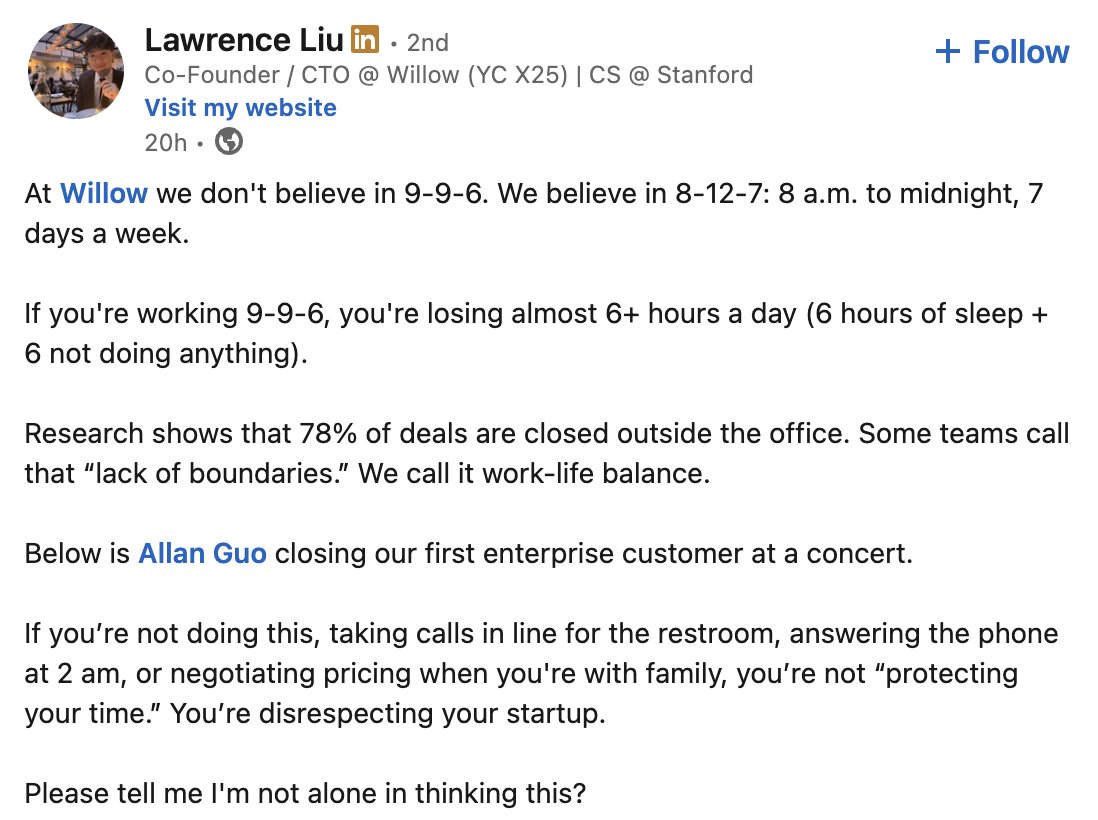
I no longer feel disheartened about not working at a booming AI startup. While it once felt like a missed opportunity, I now find peace knowing I’ve reached the Minimum AI Investment Threshold for my children.
Investing in passionate founders and employees working tirelessly for success allows me to enjoy my time playing pickleball and writing on Financial Samurai. I’m grateful to be part of the AI revolution, and it’s our responsibility to invest for our children’s futures.
To all the AI employees out there, keep grinding and enjoy the journey. You have the potential to create immense wealth over the next decade, and I’ll be cheering for your success!
Readers, how are you preparing for the potential impact of AI on your children’s futures? Are most people aware of the risks AI poses to job security? What steps are you taking to help your children thrive in an AI-driven world?
Easy Ways To Invest In AI
If you’re interested in private AI companies, consider Fundrise Venture. This platform holds stakes in companies like OpenAI, Anthropic, and Databricks. As AI reshapes the labor market and boosts productivity, allocating capital to these companies can capture potential upside before they go public. Fundrise has been a long-time supporter of Financial Samurai, and I’m personally invested in their funds.
For public exposure, consider buying shares of QQQ or the Magnificent 7—Apple, Microsoft, Google, Nvidia, Meta, Tesla—along with Oracle, which is emerging as a significant player in AI. The beauty of investing is that you don’t need to be in Silicon Valley to participate; you can invest in these leading companies from anywhere in the world.
However, remember that there are no guarantees when investing in risk assets. Fast-growing companies can be volatile during downturns. For instance, Meta lost over half its value during the 2022 bear market before recovering. Always maintain diversification, monitor your asset allocation, and ensure your portfolio aligns with your risk tolerance.