
The world is increasingly moving away from cash, and a powerful business is capturing a significant portion of nearly every digital payment made globally. With a model that thrives on volume, scale, and trust, it’s positioned to grow regardless of how people choose to pay—be it credit card, debit, or mobile. Coupled with strong brand recognition, a global footprint, and value-added services, this company is as much a tech play as it is a financial one.
Building the Rails for the Global Economy
Mastercard (MA) is a technology company in the global payments industry. It connects consumers, financial institutions, merchants, governments, digital partners, businesses, and other organizations worldwide by enabling electronic payments and ensuring those transactions are secure, simple, smart, and accessible.
Mastercard provides a variety of payment solutions and services under its brands, including Mastercard, Maestro, and Cirrus. Through its proprietary global payments network, it authorizes, clears, and settles transactions. Additionally, Mastercard offers automated clearing house (ACH) capabilities, security solutions, business and market insights, and open banking services. Its role is lucrative yet straightforward: act as the infrastructure and toll collector for the world’s digital commerce.
When Scale Meets Innovation
As I often say, it is almost 1/3 financials, 1/3 technology, and 1/3 consumer… and this balance is reflected in both the bull and bear cases.
Bull Case – Network Effects that Keep Growing
Mastercard’s growth engine operates on one of the strongest network effects in the financial world. Each time it adds a merchant, consumer, or issuing bank, the value of its network increases for everyone involved. This creates a virtuous cycle that makes it incredibly difficult for competitors to capture market share. The business is asset-light, meaning each new transaction processed incurs minimal additional costs, thereby amplifying margins.
The global shift from cash to electronic payments is far from over—especially in emerging markets where card penetration remains low. Mastercard is well-positioned to lead in these regions, bringing digital payments to millions of first-time users. Cross-border transactions, which generate higher fees, remain a robust growth driver as travel and international commerce recover. Strategic acquisitions in cybersecurity, data analytics, and open banking further strengthen its competitive edge while diversifying revenue streams beyond traditional card processing.
Bear Case – No Free Pass in Payments
Despite its advantages, Mastercard operates in an industry that consistently attracts regulatory scrutiny, particularly regarding interchange fees and market dominance. Fee caps in certain countries could compress margins, while the rise of central bank digital currencies (CBDCs) may disrupt parts of its model if adoption becomes widespread.
Its revenue is directly tied to consumer and business spending—any significant slowdown in economic activity, whether due to inflation, recessions, or geopolitical tensions, would negatively impact transaction volumes. Competitive threats from large fintechs, local payment rails, or alternative payment methods like instant bank-to-bank transfers are also on the rise. To defend market share, Mastercard sometimes offers higher client incentives, which can pressure short-term profitability. While lawsuits and antitrust investigations haven’t derailed growth so far, they remain ongoing risks that could lead to costly settlements or operational changes.
Get the Dividend Income for Life Guide
Want to retire on dividends? The Dividend Income for Life Guide shows you how to build sustainable income for decades—with clear steps, example portfolios, and smart rules to follow. Whether you’re near retirement or just starting, this guide helps you structure your finances around income, not speculation.
Download your free copy now »
What’s New: MasterCard’s Latest Moves Pay Off
Mastercard’s most recent quarter showcased the strength of both its core business and its expanding services:
-
Revenue increased by 14% and EPS rose by 13%, both above expectations.
-
Gross dollar volume grew by 9%, and cross-border volume surged by 15%, benefiting from strong travel and e-commerce activity.
-
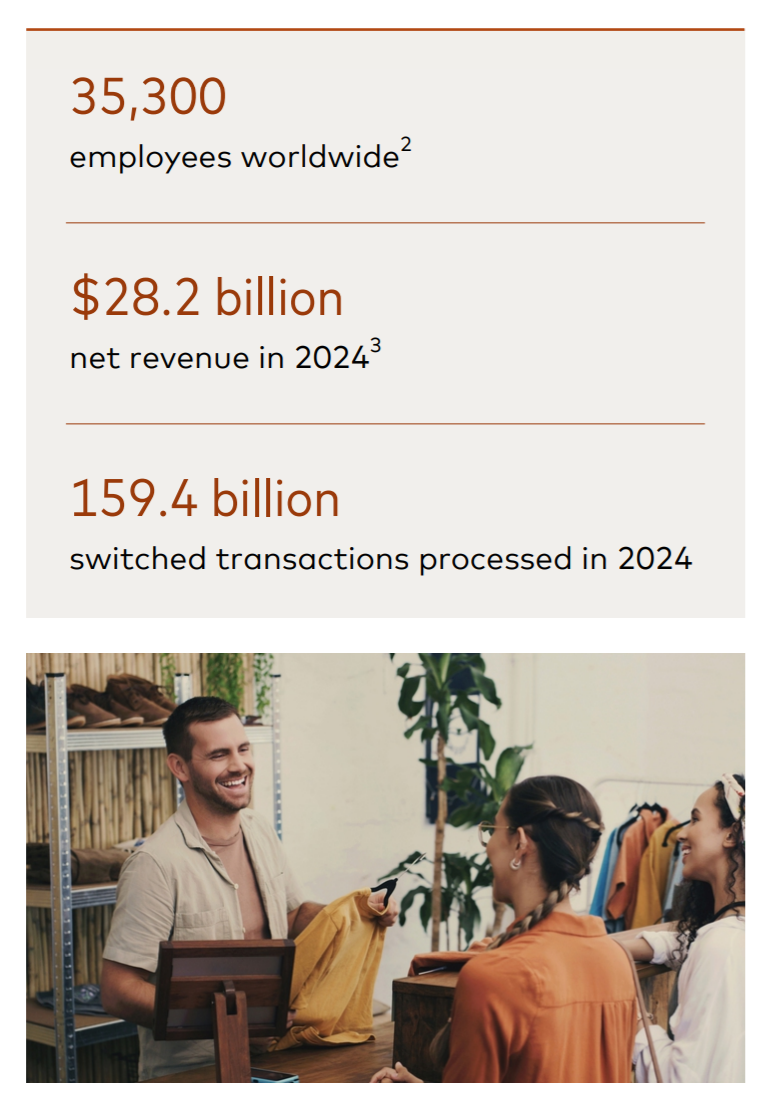
Switched transactions increased by 9%, indicating broad consumer engagement.
-
Value-added services revenue rose by 16%, driven by security, digital, and engagement solutions.
-
Launched Mastercard Agent Pay, a new agentic payments program.
-
Expanded partnerships with Microsoft and OpenAI to enhance AI-enabled payment capabilities.
The Dividend Triangle in Action: Profits Powering Payouts
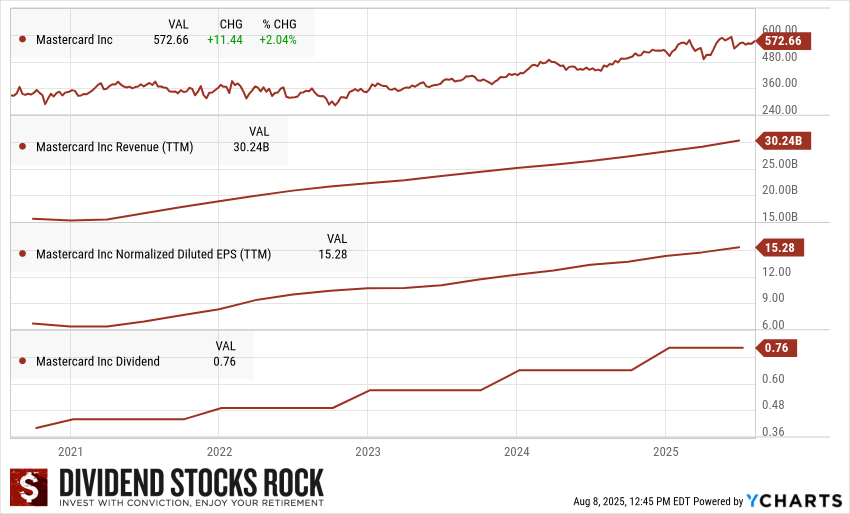
Mastercard’s Dividend Triangle is robust for a growth-oriented dividend payer:
-
Revenue Growth: Consistent double-digit gains, driven by volume expansion and service diversification.
-
Earnings Growth: High margins and scalable infrastructure lead to faster EPS growth than sales.
-
Dividend Growth: A smaller payout ratio provides ample room for continued double-digit dividend hikes.
Build Your Dividend Income for Life
The Dividend Income for Life Guide teaches you how to construct a retirement-ready portfolio based on dividend growth rather than chasing high yields. Companies like Mastercard demonstrate that even a modest yield can evolve into a powerful income stream over time when paired with consistent dividend increases. Discover how to identify these long-term winners and create a reliable income for decades.